

Echoes of 2001: Islamist Red Flags Threaten Bangladesh’s $35B Economy

Do you remember the years from 2001 to 2006? That was the period when groups such as JMB and Harkat-ul-Jihad were widely reported to have expanded their activities in Bangladesh. During that time, coordinated bomb attacks took place across 63 districts in a single day. Judges, journalists, and ordinary citizens all became targets of violence. The government then was the BNP-Jamaat coalition.

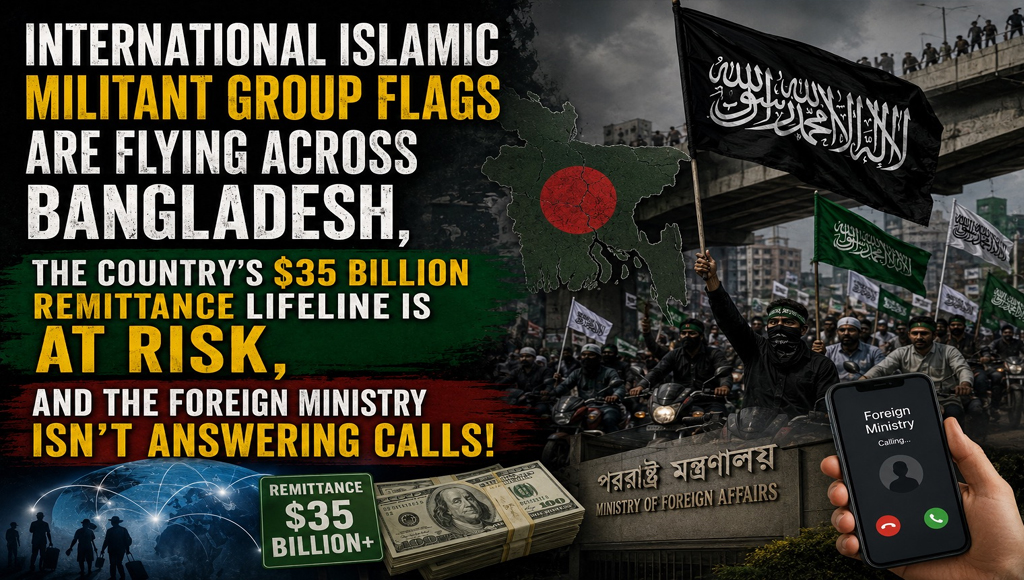
Now, in 2026, the same coalition is back in power, and flags bearing designs associated by the author with Islamist militant movements are reportedly being displayed in public spaces, from flyovers in the capital to streets in smaller towns.

Some people argue that these are simply Islamic flags. That may be their interpretation. But the larger question, according to the author, is not about the flags themselves. Rather, it is about the political environment in which such displays have become increasingly visible. Under what circumstances have large motorcycle processions carrying these flags become possible? Is it merely a coincidence that these scenes are emerging under a government that includes Jamaat-e-Islami as a political ally?

The author argues that Jamaat has long been a controversial political force, citing its historical record, including allegations related to crimes committed during the 1971 Liberation War and accusations that it has, at different times, used religious extremism as a political tool. The author further contends that BNP has repeatedly aligned itself with Jamaat for political advantage, both in 2001 and again in 2026.

The Israeli ambassador has reportedly warned of what he described as the rise of Hamas influence in Bangladesh. Whether that assessment is accurate is a matter for security experts to determine. However, the author argues that the more important question is what circumstances have allowed such concerns to be raised internationally. Those organizing public demonstrations with these flags may not realize, or perhaps do realize, that such images can contribute to an international narrative portraying Bangladesh as a country vulnerable to extremism.

Bangladesh received more than $35 billion in remittances during the last fiscal year, the highest amount in the country’s history. More than 15 million Bangladeshis work abroad, from the Middle East to Europe. Many of the countries where they are employed maintain strict policies regarding extremism. If international media were to increasingly associate Bangladesh with extremist activity, the author argues that migrant workers could be among the first to suffer the consequences through tighter immigration policies, increased scrutiny, or employment restrictions. Foreign investors, too, could become more reluctant to invest. The economic impact, the author warns, would ultimately be felt by millions of Bangladeshi families.

According to the author, the BNP-Jamaat government has remained silent on the issue. Officials from the Ministry of Foreign Affairs have reportedly declined to comment, and senior ministers have been unavailable for discussion. The author argues that this silence itself sends a message. In the author’s view, a government concerned with protecting Bangladesh’s international reputation would already have clarified its position to the international community and taken visible steps to address these concerns. The author questions whether such expectations are realistic from a government that includes Jamaat as a political partner.

The author concludes by drawing a parallel with the 2001-2006 period, arguing that Bangladesh spent many years dealing with the consequences of that era. According to the author, the country is once again moving down the same path, led by many of the same political forces.

Do you remember the years from 2001 to 2006? That was the period when groups such as JMB and Harkat-ul-Jihad were widely reported to have expanded their activities in Bangladesh. During that time, coordinated bomb attacks took place across 63 districts in a single day. Judges, journalists, and ordinary citizens all became targets of violence. The government then was the BNP-Jamaat coalition.

Now, in 2026, the same coalition is back in power, and flags bearing designs associated by the author with Islamist militant movements are reportedly being displayed in public spaces, from flyovers in the capital to streets in smaller towns.

Some people argue that these are simply Islamic flags. That may be their interpretation. But the larger question, according to the author, is not about the flags themselves. Rather, it is about the political environment in which such displays have become increasingly visible. Under what circumstances have large motorcycle processions carrying these flags become possible? Is it merely a coincidence that these scenes are emerging under a government that includes Jamaat-e-Islami as a political ally?

The author argues that Jamaat has long been a controversial political force, citing its historical record, including allegations related to crimes committed during the 1971 Liberation War and accusations that it has, at different times, used religious extremism as a political tool. The author further contends that BNP has repeatedly aligned itself with Jamaat for political advantage, both in 2001 and again in 2026.

The Israeli ambassador has reportedly warned of what he described as the rise of Hamas influence in Bangladesh. Whether that assessment is accurate is a matter for security experts to determine. However, the author argues that the more important question is what circumstances have allowed such concerns to be raised internationally. Those organizing public demonstrations with these flags may not realize, or perhaps do realize, that such images can contribute to an international narrative portraying Bangladesh as a country vulnerable to extremism.

Bangladesh received more than $35 billion in remittances during the last fiscal year, the highest amount in the country’s history. More than 15 million Bangladeshis work abroad, from the Middle East to Europe. Many of the countries where they are employed maintain strict policies regarding extremism. If international media were to increasingly associate Bangladesh with extremist activity, the author argues that migrant workers could be among the first to suffer the consequences through tighter immigration policies, increased scrutiny, or employment restrictions. Foreign investors, too, could become more reluctant to invest. The economic impact, the author warns, would ultimately be felt by millions of Bangladeshi families.

According to the author, the BNP-Jamaat government has remained silent on the issue. Officials from the Ministry of Foreign Affairs have reportedly declined to comment, and senior ministers have been unavailable for discussion. The author argues that this silence itself sends a message. In the author’s view, a government concerned with protecting Bangladesh’s international reputation would already have clarified its position to the international community and taken visible steps to address these concerns. The author questions whether such expectations are realistic from a government that includes Jamaat as a political partner.

The author concludes by drawing a parallel with the 2001-2006 period, arguing that Bangladesh spent many years dealing with the consequences of that era. According to the author, the country is once again moving down the same path, led by many of the same political forces.

আরো পড়ুন

LATEST